- IOS List
- Posts
- IOS operations will change with OSHA's new heat standards.
IOS operations will change with OSHA's new heat standards.
The scope is broad: full-time staff, mechanics, truck drivers, temp labor, and third-party crews would all fall under the same standards while working on your site.

Justin W
December 05, 2025
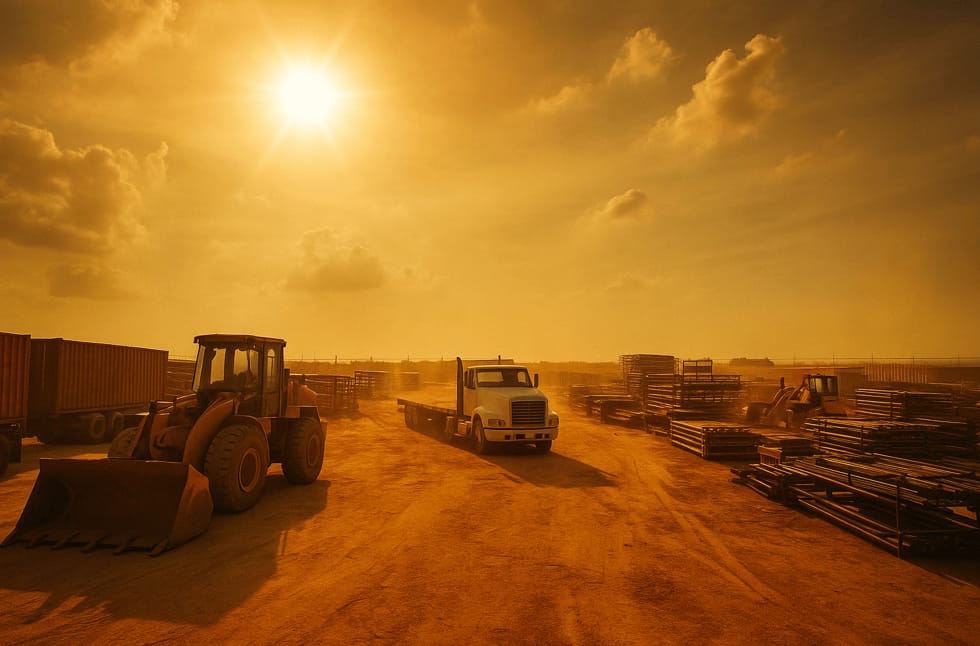
OSHA’s Pending Heat Standard: What It Means for IOS Yards

The next regulatory shift for IOS won’t originate from zoning departments or environmental reviews—it’s coming from a federal safety mandate. OSHA is nearing completion of its national Heat Injury and Illness Prevention Standard, with public hearings wrapping up in July 2025. Once finalized, the rule will apply to most outdoor and semi-enclosed industrial environments, which puts IOS operations squarely in the spotlight.
What Operators Should Expect
The draft framework signals a major change: heat-management will become a required, documented safety program—not an informal best practice. Under the proposed rule, IOS owners and operators would need to:
Track heat index or WBGT conditions throughout the day.
Provide accessible cooling options and hydration when specific heat thresholds are met.
Establish scheduled rest periods tied to temperature and workload intensity.
Train employees and contractors on recognizing and responding to heat stress.
The scope is broad: full-time staff, mechanics, truck drivers, temp labor, and third-party crews would all fall under the same standards while working on your site.
Why This Hits IOS Harder Than Most Industrial Asset Types
Unlike warehouses or manufacturing facilities, IOS yards offer little natural protection from heat. Many lack shade, mechanical cooling, or climate-controlled break areas—making “compliance by default” impossible.
Operators should prepare for potential increases in:
Capex for shade structures, portable cooling units, misting setups, and hydration stations.
Opex and administrative work, including temperature monitoring, recordkeeping, and written program management.
Insurance scrutiny, as carriers evaluate how heat risk affects outdoor-operations exposure.
But there’s a competitive angle, too. Operators who build strong heat-mitigation programs early may reduce unplanned downtime, improve safety metrics, and appeal to capital partners with ESG expectations.
Proposed Timeline (as of today)
Aug 30, 2024 – Proposed rule released.
Jan 14, 2025 – General comment period closed.
June 16–July 2, 2025 – Public hearings.
Oct 30, 2025 – Deadline for post-hearing submissions.
Early 2026 – Anticipated final rule (subject to adjustment).
The Real Takeaway for IOS Owners
The operators who treat heat exposure as a daily operational variable—not an annual training topic—will adapt fastest. Expect the leaders in the category to:
Integrate cooling zones into site design.
Use sensors or automated alerts for high-heat conditions.
Adjust shift structures for extreme-temperature windows.
Build reliable hydration, rest, and oversight plans into standard operating checklists.
OSHA’s heat rule isn’t just compliance—it’s an operational shift. The IOS yards that embrace this early will protect their teams, reduce disruptions, and maintain productivity as regulations tighten.
Stay ahead of the curve,
The IOS List Team

→ Try our resources for IOS pros: